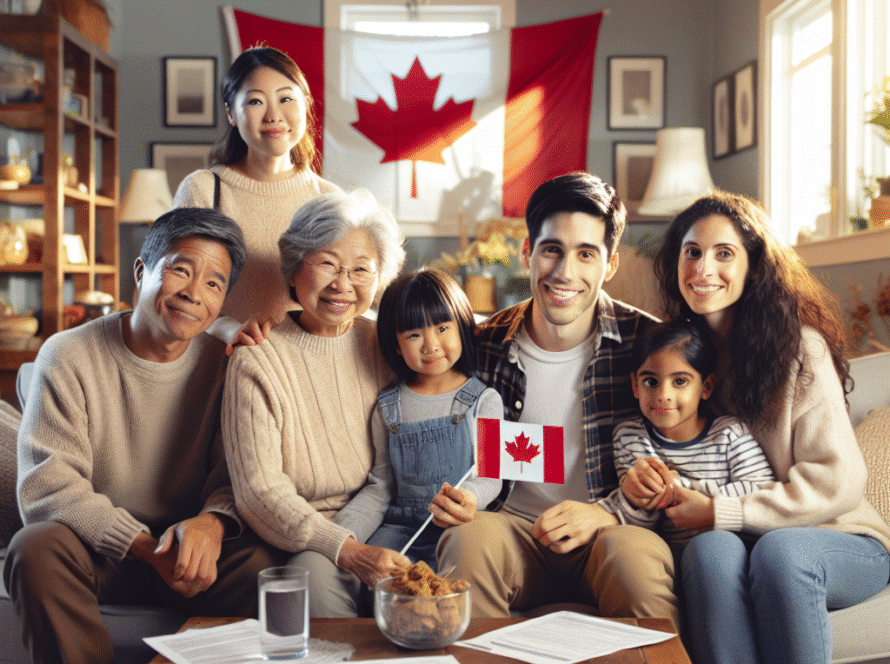
Parents and Grandparents Sponsorship Applications Now Being Accepted

Canada’s Parents and Grandparents Program, often called the PGP, remains one of the most sought-after routes for families who want to reunite permanently. For many would-be sponsors, the biggest question each year is simple: who will actually get an invitation to apply?
While the invitation mechanics can feel opaque, what is clear is what happens after an invitation arrives. The program is document-heavy, fee-based, and increasingly digital. Families who understand the application steps and prepare early tend to move more smoothly once the window opens.
Why PGP invitations matter so much
Unlike many economic immigration pathways, the PGP is not mainly about filling labour gaps. It is about long-term family stability. For newcomers who have built a life in Canada, bringing parents or grandparents can change everything, from childcare support to family well-being and settlement success.
The challenge is that demand usually exceeds supply. That makes readiness a practical advantage. If you are invited, timelines can feel tight. Having key information organized in advance can reduce stress and prevent costly mistakes.
The application process, step by step
1) Create or sign in to your online account
PGP applications are submitted online. Sponsors should be prepared to manage uploads, forms, and follow-up requests through an account portal. If you have not used Canada’s online immigration systems before, factor in time to set up access and troubleshoot logins.
2) Complete the required forms
The PGP package typically splits paperwork between two sides: the person being sponsored and the sponsor.
Forms commonly required for the person being sponsored include:
- Generic Application Form for Canada (IMM 0008)
- Schedule A, Background and Declaration (IMM 5669)
- Additional Family Information (IMM 5406)
- Supplementary Information, Your Travels (IMM 5562)
If the sponsored person has dependants who are 18 or older, they may also need to complete IMM 5669, IMM 5406, and IMM 5562. This requirement can apply whether or not those dependants are immigrating, depending on the case details.
Other forms may be required based on personal history, such as:
- Statutory Declaration of Common-Law Union (IMM 5409)
- Statutory Declaration of Severance of a Common-Law Union (IMM 5519)
- Details of Military Service (IMM 5546)
- Details related to government or police service
Forms commonly required for the sponsor include:
- Document Checklist, Sponsor (IMM 5771)
- Application to Sponsor, Sponsorship Agreement and Undertaking (IMM 1344)
- Financial Evaluation for Parents and Grandparents Sponsorship (IMM 5768)
- Income Sources for the Sponsorship of Parents and Grandparents (IMM 5748), if applicable
- Statutory Declaration of Common-Law Union (IMM 5409), if applicable
The financial forms are not just administrative. They are central to the file. This is where applications often slow down because sponsors may need to prove income history and household size calculations.
3) Pay the fees
The government fees for sponsoring a parent or grandparent add up quickly, and families should budget early.
Key listed fees include:
- Sponsorship fee: $85
- Principal applicant processing fee: $545
- Right of permanent residence fee: $575
Total for a parent or grandparent when all three are paid: $1,205
There are additional fees if you include family members:
- Spouse or partner of the sponsored parent or grandparent: $635 processing fee plus $575 right of permanent residence fee, for $1,210
- Dependent child: $175 per child
Sponsors should also expect possible third-party costs, which can include items like medical exams, police certificates, translations, and other supporting documents. These expenses vary widely depending on where applicants live and what documents they must obtain.
4) Submit the online application
Once forms are completed and fees are paid, the application is submitted through the online system. At this stage, organization matters. Clean scans, consistent names, and clear supporting documents can help avoid follow-up requests later.
5) Provide additional information during processing
Even a well-prepared file can trigger requests for extra documents or clarifications. Applicants should monitor messages closely and respond within deadlines. Delays in responding can slow processing and sometimes put an application at risk.
What sponsors should take from this
The PGP is less about a single moment of selection and more about readiness for a high-stakes, evidence-based application. The best strategy is to treat an invitation as a starting gun, not the first step.
Families interested in immigrating to Canada through family reunification should focus on three practical priorities:
1) Keep records organized, especially travel history and background information.
2) Understand the financial evaluation requirements and prepare proof early.
3) Budget for both government fees and third-party costs so finances do not become a last-minute barrier.
For many Canadians and permanent residents, sponsoring parents or grandparents is the final piece of settling for good. The process is demanding, but for those prepared to meet the paperwork and cost head-on, it can be one of the most meaningful immigration pathways Canada offers.
Disclaimer Statement: This content is authored by a 3rd party and regenerated by AI tools. GCMS Notes Request does not guarantee, vouch for or endorse any of its contents nor is responsible for them in any manner whatsoever. Please take all steps necessary to ascertain that any information and content provided is correct, updated, and verified. GCMS Notes Request hereby disclaims any and all warranties, express or implied, relating to the report and any content therein. Reference