

GCMS 样本笔记
A GCMS notes report is a multi-page PDF document that includes officer assessments, processing history, decision rationale, and status updates for your Canadian immigration application. The report organizes information into sections including applicant details, case notes, processing activities, and document checklists. Each entry carries a timestamp and identifies the officer or system that created it.
What Does a GCMS Notes Report Look Like?
IRCC delivers GCMS notes as a PDF document, typically ranging from 5 to 50+ pages depending on your application’s complexity and history. The government generates this report directly from its Global Case Management System, the internal database that manages all immigration applications in Canada.
While the format stays consistent across all applications, the content varies based on your application type, how long it has been in process, and how many times officers have interacted with your file. To understand what GCMS notes are and why they matter, see our GCMS笔记完全指南.
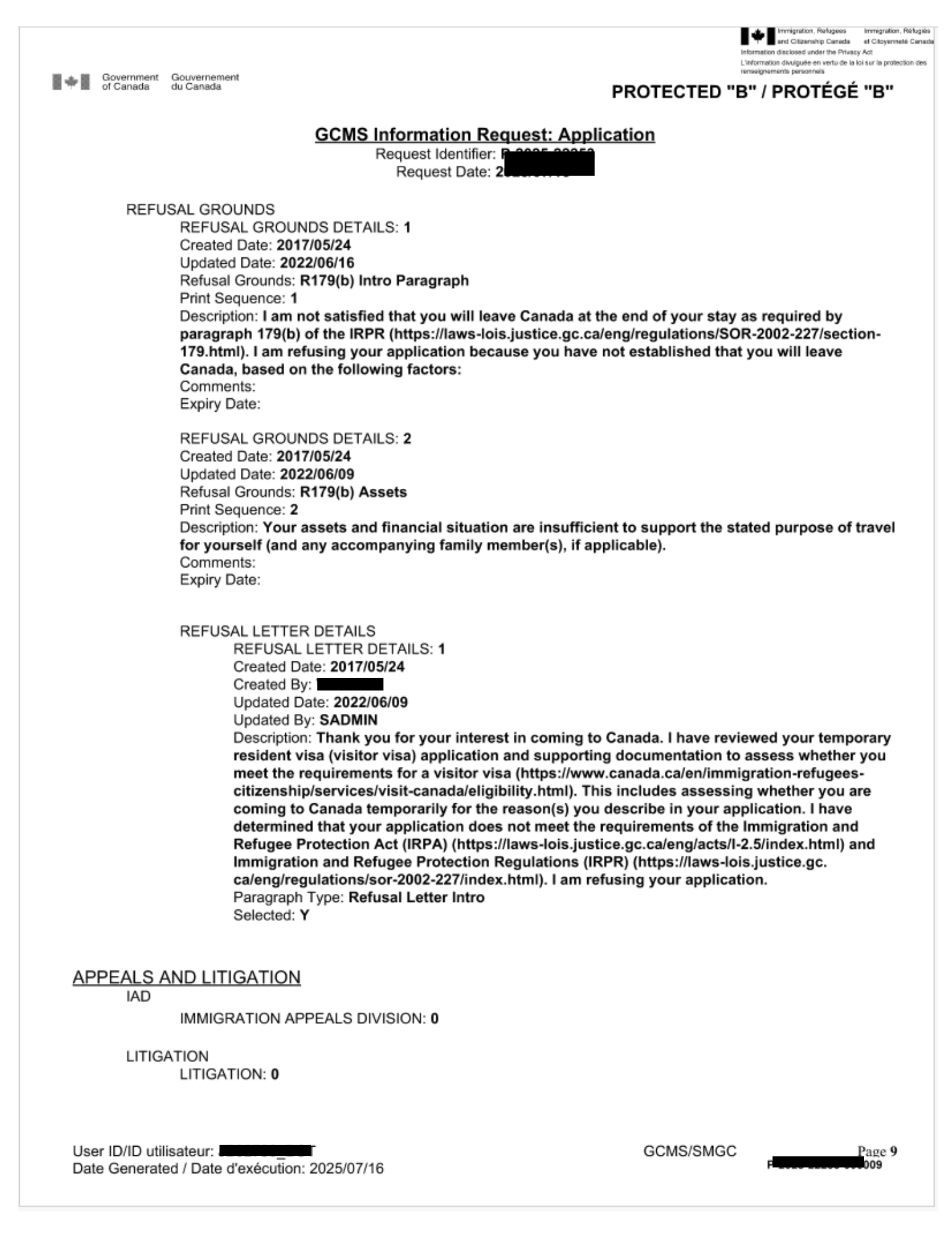
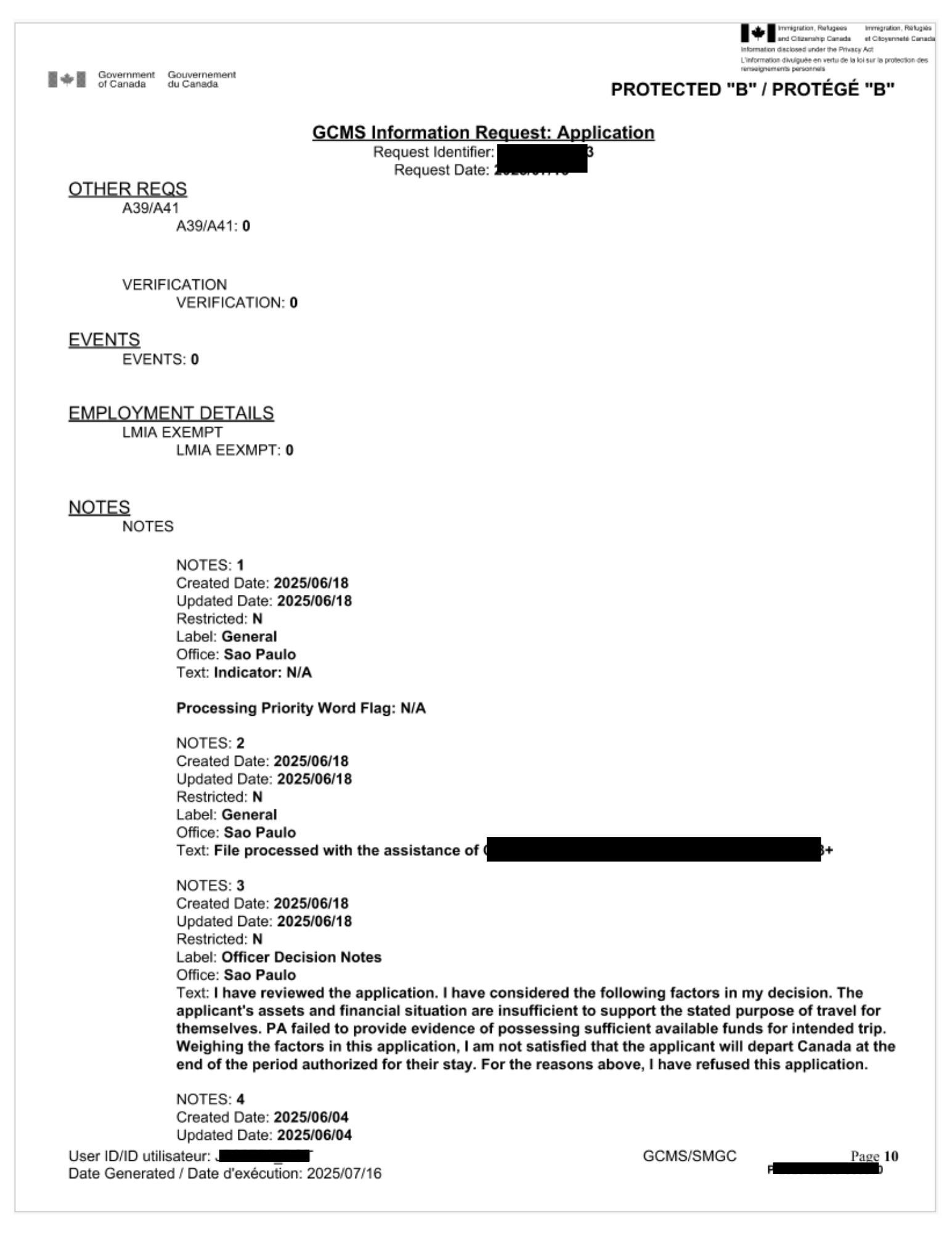
Sample GCMS Notes Report
Key Sections in a GCMS Notes Report
Applicant Information
This section contains your personal details as the system recorded them: full name, date of birth, UCI number, application number, and application type. It also shows the visa office handling your case and your application’s current status.
Case Notes (Officer Notes)
This is the most valuable section for most applicants. Case notes contain written assessments from immigration officers who reviewed your file. Each entry carries a date and may include observations about your documents, concerns about eligibility, interview notes, and processing decisions. Because officers frequently use abbreviations and internal codes, you may want to refer to our GCMS 词汇表 for help understanding them.
Processing Activities
This section presents a chronological log of every action taken on your file: when IRCC received your application, when it assigned your file to an officer, when it initiated background checks, and when it recorded decisions. As a result, this timeline helps you pinpoint exactly where delays occurred.
Document Checklist
The document checklist shows which supporting documents IRCC received, which ones it still requires, and whether any documents raised concerns. If IRCC refused your application due to insufficient documentation, this section reveals exactly what went missing or proved problematic.
Security Screening Status
If you ordered CBSA GCMS notes or the bundle, this section displays the status of your background checks. Specifically, it indicates whether security screening has finished, remains in progress, or requires additional checks. For more on what CBSA notes contain, see our guide on IRCC 与 CBSA GCMS 备忘录.
What Will You Learn From Your GCMS Notes?
Your GCMS notes will tell you:
- The current processing stage of your application
- What officers have assessed and any concerns they noted
- Whether IRCC received and reviewed all required documents
- The status of background and security checks
- The reason for a refusal, if IRCC declined your application
- Whether a decision is pending or already finalized
Sample GCMS Notes by Visa Type
Although the format of GCMS notes stays consistent across all application types, the content of officer assessments differs based on what they evaluate. For example, study permit notes focus on acceptance letters, finances, and ties to your home country. In contrast, visitor visa notes focus on your purpose of visit and intent to return. Meanwhile, Express Entry notes focus on CRS score verification and eligibility assessment.
See our visa-type specific guides for details on what to expect: GCMS 学习许可备注, GCMS 访客签证须知, GCMS 快速通道备注, GCMS 永久居留申请须知, GCMS 公民教育课程笔记, GCMS 工作许可说明.
What a Refusal Looks Like in GCMS Notes
If IRCC refused your application, the case notes section will contain the officer’s reasoning. Unlike the generic refusal letter you receive from IRCC, GCMS notes reveal the specific factors the officer weighed. You will see which documents the officer considered insufficient, which eligibility concerns they flagged, and what ultimately led to the negative decision.
This information proves essential for building a stronger reapplication. After reviewing your notes, you may want to read our guide on 收到GCMS纸币后该怎么办 下一步。.
Common Abbreviations in GCMS Notes
GCMS notes use internal abbreviations and codes throughout. Some common ones include PA (Principal Applicant), SA (Spouse/Accompanying), BF (Background Check/Filing), VO (Visa Office), and R10 (referring to Regulation 10 of IRPR for application completeness). For a full reference, visit our GCMS notes glossary with status codes and their meanings.
How to Read Your GCMS Notes Effectively
Start with the case notes section first, as it contains the most actionable information. Then, read entries from newest to oldest to understand your application’s current state right away. Pay close attention to any flags or concerns that officers raised. If you see references to missing documents, additional verification, or security holds, these typically explain processing delays.
For legal matters or complex cases, consider sharing your GCMS notes with a Regulated Canadian Immigration Consultant (RCIC) or immigration lawyer. Our RCIC consultation services can help you interpret what the notes reveal about your case.
常见问题
所有 GCMS 笔记的长度都一样吗?
不。其长度取决于您的申请类型、处理历史以及与官员的互动次数。简单的访客签证可能需要填写 5 至 10 页,而复杂永久居留案件则可能需要填写 30 至 50 多页。.
我的 GCMS 笔记会显示我申请的最终决定吗?
如果IRCC在生成通知单时已经做出决定,那么报告通常会附有决定理由说明。但如果您的申请仍在审批中,通知单会显示当前阶段以及任何待决事项。.
我可以先看样片后再下单吗?
GCMS 的笔记因申请人和申请而异,因此通用的样本无法准确反映你的实际档案。话虽如此,本页描述的各个部分在所有报告中都保持一致,让你能对将要看到的内容有清晰的了解。.
学习许可的 GCMS 笔记样本与访客签证有何不同?
申请表格的格式保持不变,但官员评估的重点则不同。留学许可申请表评估您的学习计划、财务状况以及与家人的关系;而访客签证申请表则评估您的访问目的以及是否打算离开加拿大。申请流程和文件清单部分遵循相同的结构。.
GCMS 笔记和完整应用程序文件有什么区别?
GCMS 笔记包含官员评估和处理历史。然而,完整的申请档案包括 GCMS 笔记中的所有内容,以及您提交的所有表格、支持文件以及您与 IRCC 之间的信件。因此,案卷提供了最全面的记录。.
订购 GCMS 纸币
See exactly what your immigration file contains. Visit gcmsnotesrequest.ca to order your GCMS notes. We deliver your report as a secure, downloadable PDF to your account. Check the pricing on our gcms order 页面.
 English (Canada)
 Français du Canada
 हिन्दी
 ਪੰਜਾਬੀ
 ગુજરાતી
 Español de México
 简体中文
 العربية
 اردو
 বাংলা
 Português do Brasil
 Italiano